

Buller District
Regional Overview
Council’s science team has a number of initiatives aimed at improving our understanding of regional air quality.
Long term continuous monitoring of airborne particulates has been undertaken in Reefton since 2006. Surveys have been undertaken in 2020 and 2021 to find out more about the spatial distribution of particulates across Reefton. These spatial surveys are NOT for evaluating the performance of individual households and discharges. But they help us identify areas where quality is poorest and may require further monitoring. Sometimes the role of geography and climate can be just as important as how things are burnt when it comes to smoky air.
A spatial survey of fine airborne particulates (PM2.5) was carried out in Westport over winter 2022, as well as surveys of sulphur dioxide and nitrogen dioxide in both Reefton and Westport. Sulphur dioxide and nitrogen dioxide results were low (in Reefton and Westport) however, due to some elevated areas of PM identified from the 2022 Westport survey, a similar survey was carried out in winter 2023 with some additional sites, to gain a better understanding of Westport air quality and whether there are likely to be any issues which could require further work in future. A continuous monitoring site operated in Westport from 2023 to 2025. No exceedances of the national air quality standard (daily average PM10 of 50 micrograms / m3) were recorded.
A preliminary spatial survey of PM was carried out in Greymouth (including Runanga, Cobden, central Greymouth and Paroa) over winter 2023. A more comprehensive survey, focusing on central Greymouth, was undertaken in winter 2024. This survey work indicated some areas of higher average PM which Council was keen to investigate further. A continuous monitoring site for Greymouth was established in winter 2025.
Spatial surveys of PM were also undertaken in Hokitika over winter 2024 and 2025. Results of this work showed that there was variation in air quality across the town but overall air quality was likely to meet national standards.
In winter 2026, a spatial survey was carried out in Runanga and Dunollie to assess air quality in these areas. One site has been previously monitored in Runanga as part of a wider Greymouth air quality survey in winter 2023 and results at this site were good. Undertaking a wider survey of Runanga will assess whether this initial data is representative of PM levels across the town. No air quality monitoring has been undertaken in Dunollie previously so this survey will help to identify whether there are any air quality issues in this area which may require further investigation in future.
Westport
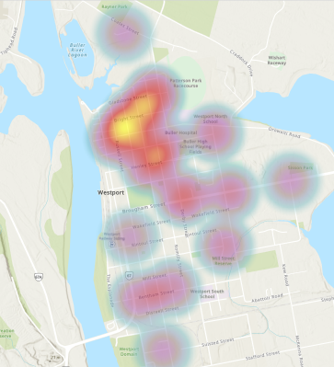
Westport 2022 spatial survey PM2.5 daily average plot showing higher PM concentrations in yellow.
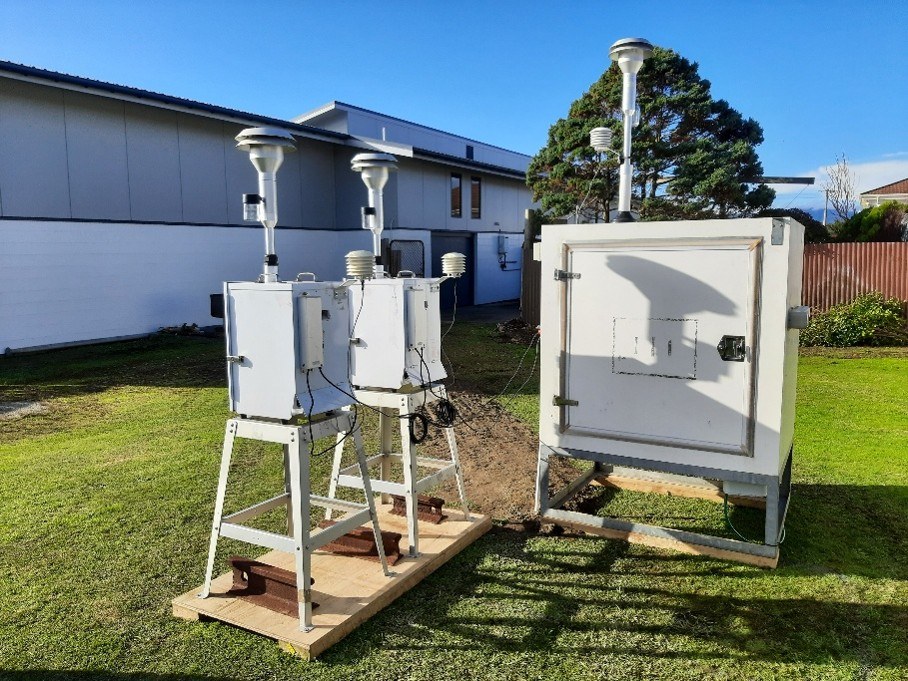
Westport continuous monitoring site.
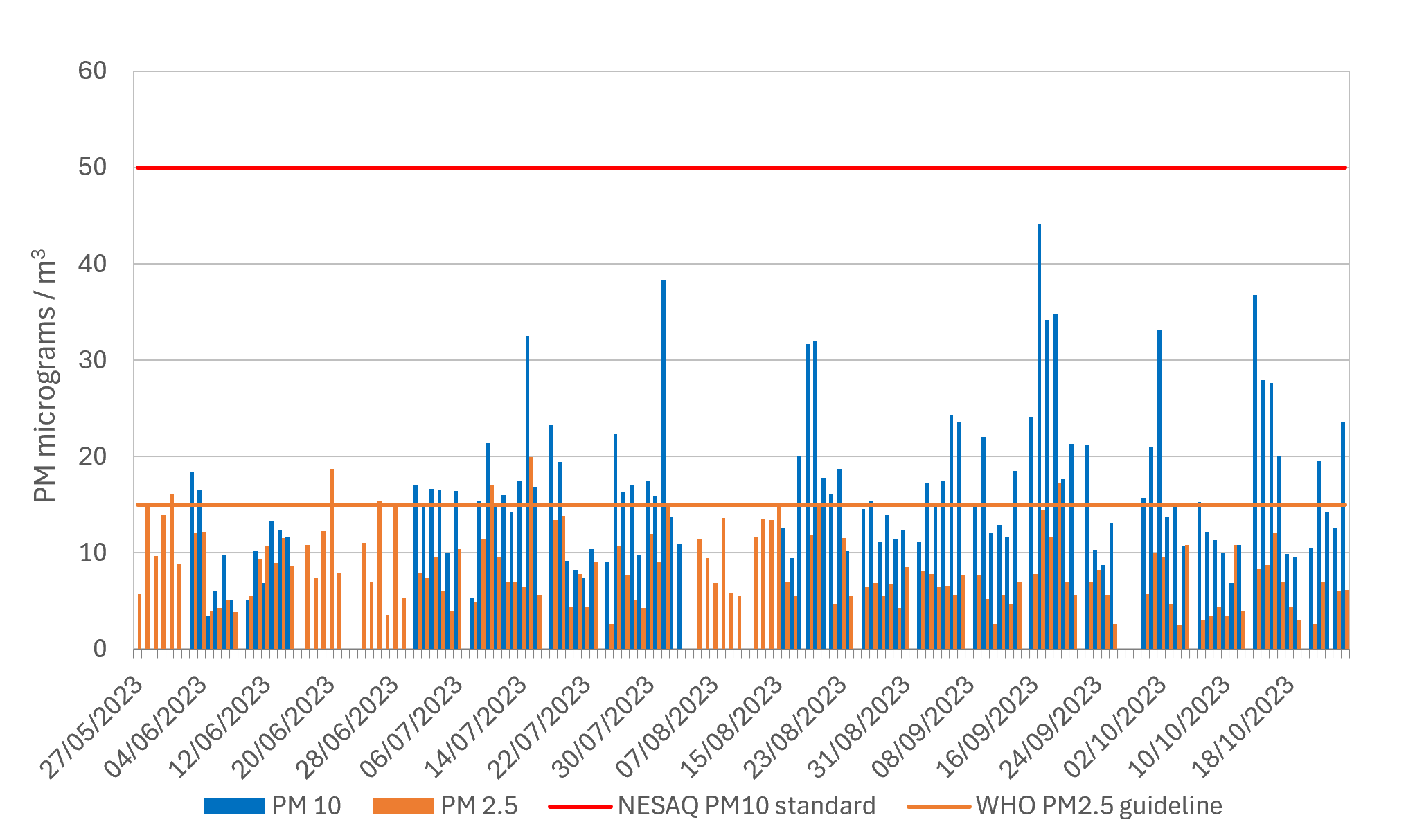
MetOne daily average PM10 and PM2.5 for Westport winter 2023. Note there are a few gaps in the PM10 data due to instrument faults, PM2.5 data is available for most of these gap periods.
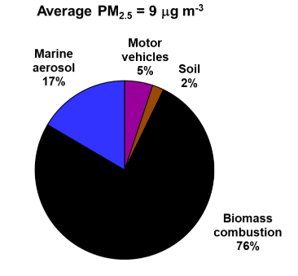
Average source mass contributions to PM2.5 and PM10 at Westport over the winter monitoring period, 2023 (Davy & Trompetter, 2024).
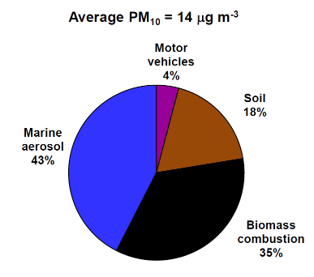
Average source mass contributions to PM2.5 and PM10 at Westport over the winter monitoring period, 2023 (Davy & Trompetter, 2024).
Monitoring in Westport over 2022 – 2025 has shown higher PM in more northern parts of the town, especially the north-west corner of the town and further north-east around the trotting club.
Continuous monitoring has shown to be typical of domestic home heating as a main PM source over the winter months, in both daily and annual patterns, with higher PM generally seen from June – August.
There may be a combination of factors contributing to areas of higher PM. Calm conditions associated with the predominant winds may be conducive to higher PM across the town and variation in the number and type of emissions in localised areas may also lead to differences spatially across Westport. Wind strength and direction influences the source of particulates measured under different conditions and different times of the year. Sea salt and biomass combustion were the highest contributors to PM source measured over winter 2023, sea salt was particularly high with south-east and north-west winds.
Westport spatial PM survey winter 2022
Westport & Reefton
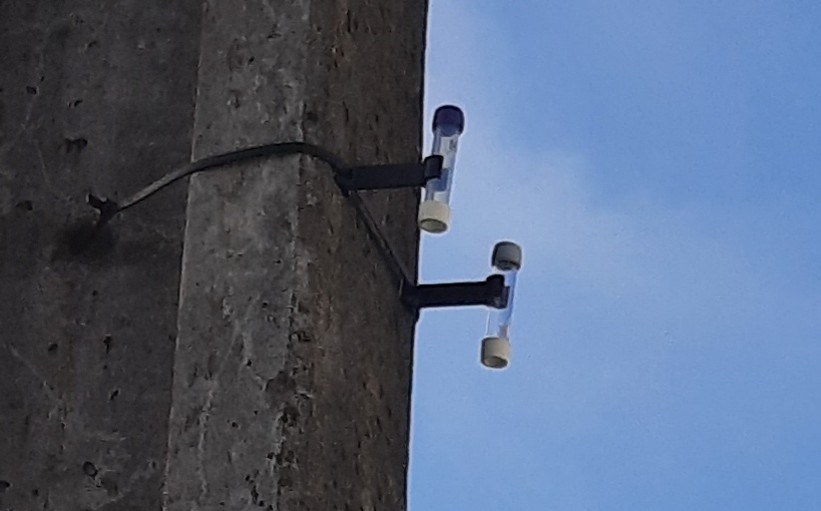
Diffusion tube samplers used to measure nitrogen dioxide and sulphur dioxide.
Reefton
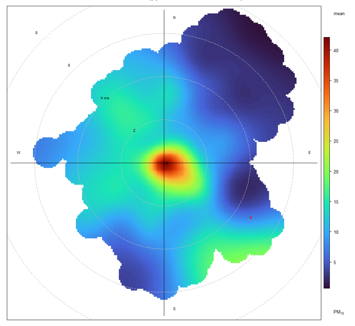
Polar plot showing PM10 measured at the Cnr Lucas Street and Buller Rd site compared to wind speed and direction June - Sept 2006 - 2025. Wind speed shown in increments of 2m/s.
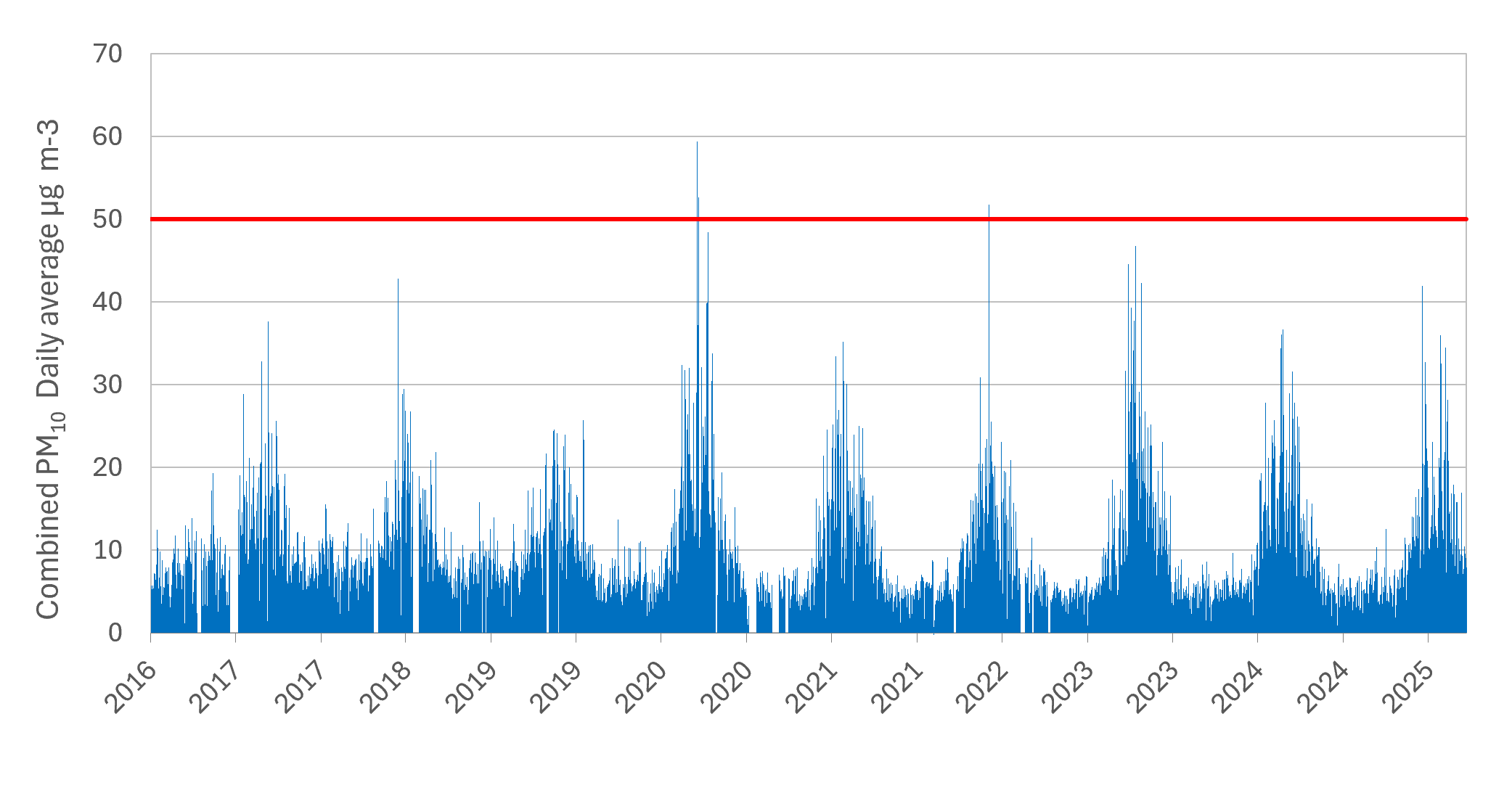
Reefton Air Quality @ School PM10 daily average. Red line shows current NESAQ PM10 24-hour standard.
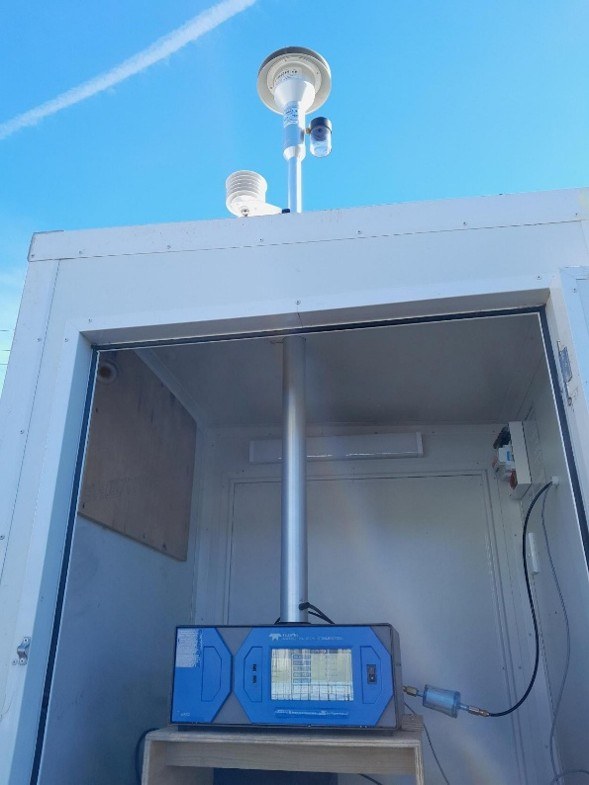
Reefton continuous air quality monitor.
See here for more information and background reports on air quality in Reefton.
