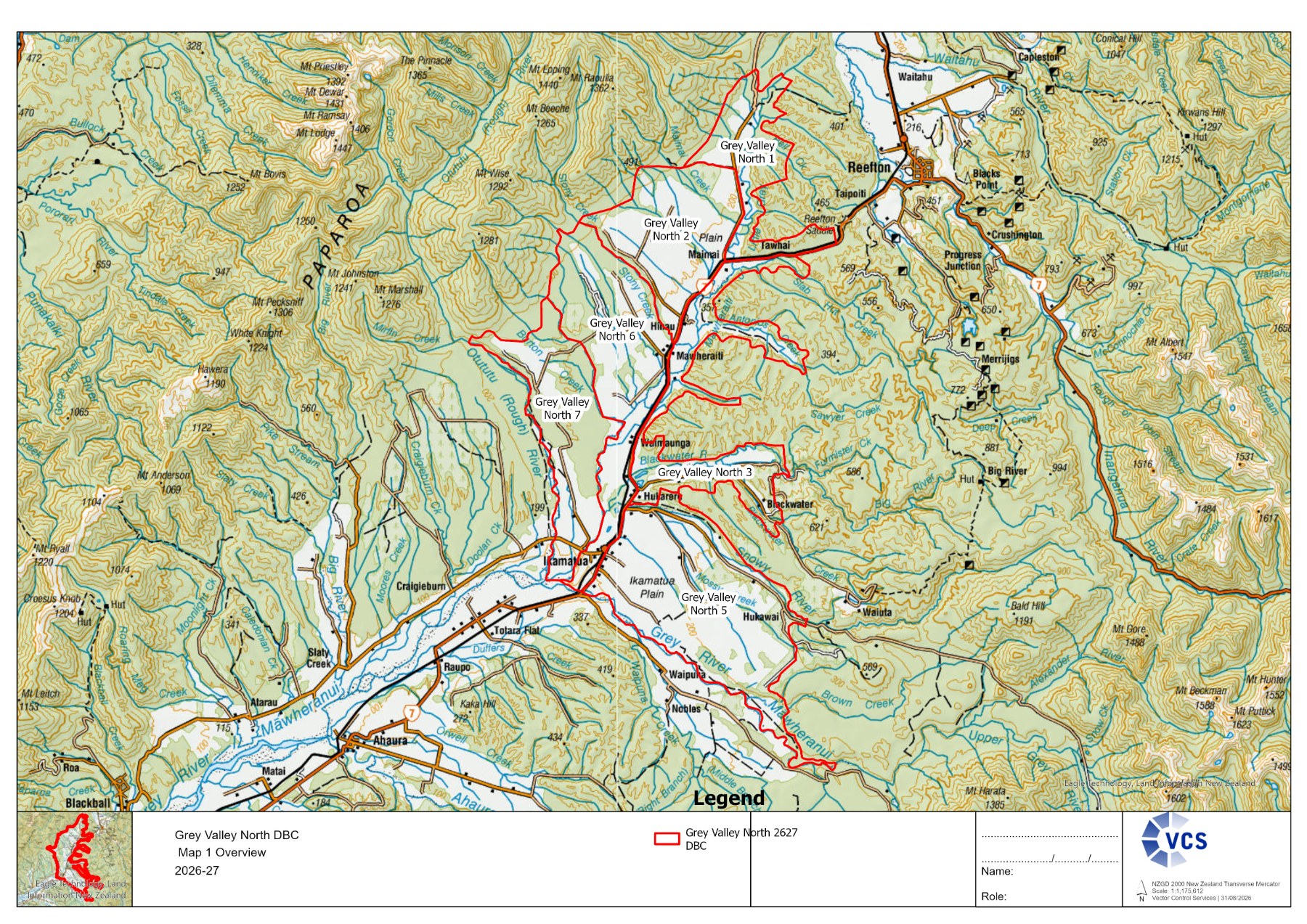
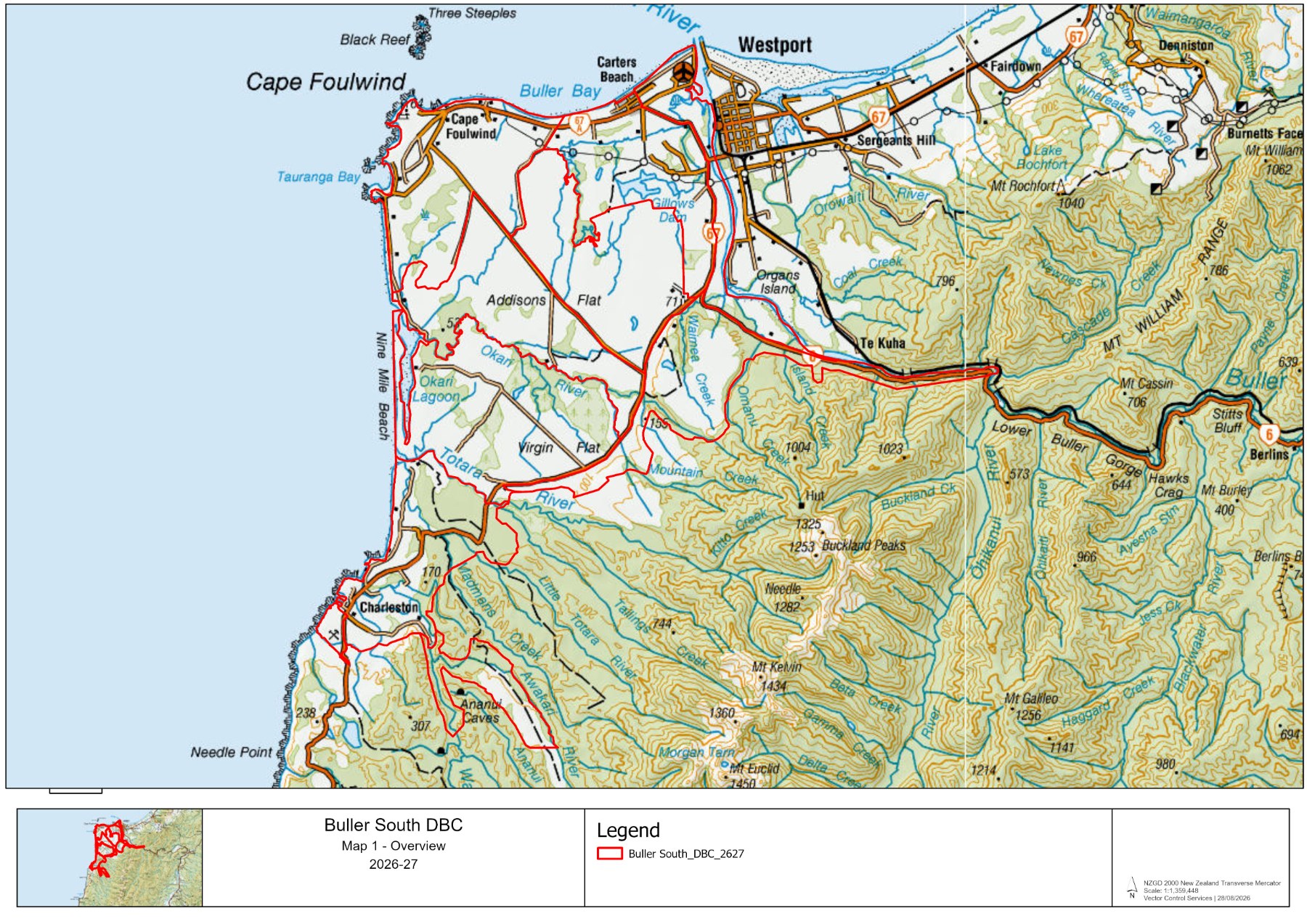
Upcoming aerial predator control
Wilberforce Mathias Possum Control 14 September-30 November 2026
The rare forests of kaikawaka/mountain cedar and Hall’s totara in the upper tributaries of the Wilberforce and Mathias are a nationally significant ecosystem known as the beech gap which beech trees never colonised.
Wineberry, southern rata, fuchsia, lancewood and kamahi contribute to this forest’s diversity. These forests are also home to a range of threatened native wildlife including kakariki, karearea/NZ falcon, piwauwau/rock wren, whio/blue duck, kea and koekoea/long-tailed cuckoo.
Possums are a serious threat to this type of forest ecosystem. Mature trees of cedar and totara are particularly vulnerable as they are highly palatable species preferred by possums.
Studies in New Zealand show severe dieback and collapse of forests from possum browse. Recent monitoring shows possum numbers are high in the Wilberforce and Mathias valleys.
Wilberforce Mathias 2026
Kahurangi National Park
Parapara 2026 and Garibaldi-Kakapo 2027
The Department of Conservation (DOC) is planning expanded predator control operations in Kahurangi between October 2025 and June 2027 to protect native species during the most widespread mast in the South Island in seven years.
Five separate operations are planned for completion between July 2026 and May 2027. The two operations listed here are being delivered by Vector Control Services for DOC. These operations are: Parapara starting in July 2026 and Garibaldi-Kakapo in March 2027.
How are we going to achieve this
The safest and most effective method we have to control introduced predators over large areas is to use biodegradable cereal pellets containing 1080.
This bait targets rodents and possums. Stoats are also controlled through secondary poisoning as they feed on the carcasses of the dead rodents.
Vector Control Services has been contracted by DOC to complete the work.
Each of the operations will consist of one prefeed of tan coloured nontoxic cereal pellets followed by one application of 1080 cereal pellets dyed green.
Baits will be distributed by helicopter on predetermined flight paths that are monitored.
Please treat the Wilderness areas with caution until the warning signs are removed.
Managing risk
1080 is poisonous to humans, domestic and game animals. In areas where the toxin has been applied dogs are highly at risk until poisoned carcasses have disintegrated. This takes four to eight months or longer.
Risks can be eliminated by following these rules:
DO NOT touch bait
WATCH children at all times
DO NOT EAT animals from this area or within the buffer zone outside the treatment boundary.
The standard buffer zone is 2km for deer and pigs, 200m for rabbits, and 1km for hares, tahr, wallabies and possums.
Poison baits or carcasses are DEADLY to DOGS
Observe these rules whenever you see warning signs about pesticides. These signs indicate pesticide residues may be still present in baits and poisoned carcasses. When signs are removed this means you can resume normal activities in the area. Always report suspected vandalism or unauthorised removal of signs.
Parapara 2026 factsheet