Understanding natural hazards
Natural hazards are natural events that can hurt people or damage places, like earthquakes, volcanoes, tsunamis, floods, erosion, landslides, storms, and droughts. They only become hazards when they affect where people live, work, or travel.
A “hazard” is the dangerous natural event itself, while “risk” is about what that event could do to people and the things they care about. Risk comes from three things together: the hazard, what is in its way (exposure), and how easily it can be damaged (vulnerability).
Key words
Consequences
What happens because of a hazard, such as damage to homes, roads, nature, or people’s lives.
Exposure
The people, buildings, roads, and other things that are in places that could be hit by a hazard.
Vulnerability
How easily people or things can be harmed, and how well they can cope and recover.
Likelihood
How likely a hazard is to happen; for example, a “1 in 100‑year” flood has a 1% chance each year, which is called a 1% Annual Exceedance Probability (AEP) and is also known as a 1 in 100‑year Average Recurrence Interval (ARI).
Risk
The overall danger, based on how likely a hazard is and how serious the consequences would be. Risk can be described as low, medium, or high, depending on how likely an event is and how serious the consequences could be.
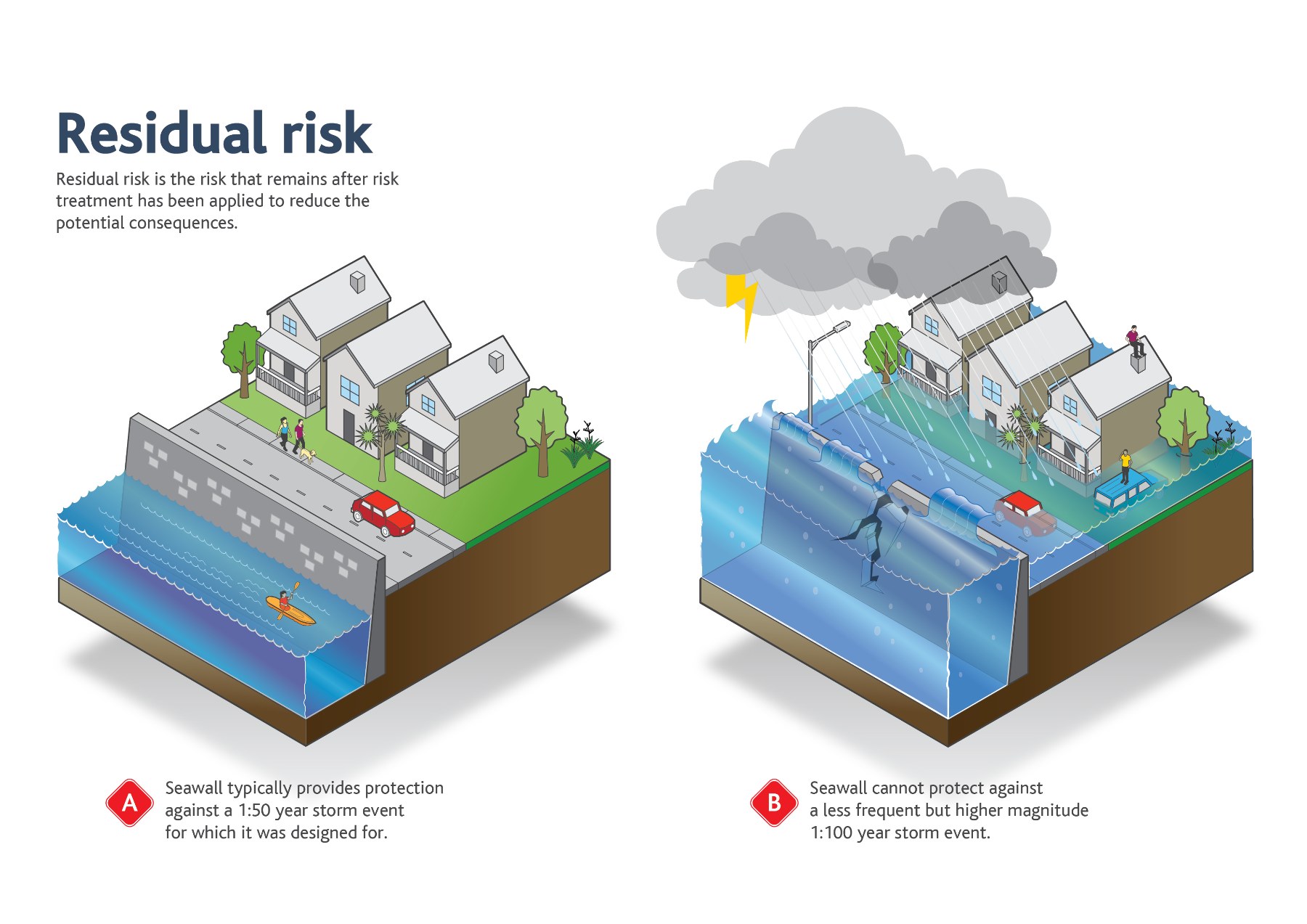
Residual risk
The risk that remains even after protection, for example, if a flood is bigger than what a stopbank was built for.
Example of residual risk. Image sourced from Natural Hazard Risk Communications Toolbox (Auckland Council, GNS).
Climate change
Climate change can make some natural hazards happen more often and cause more damage. It can also mean that more people and places end up in areas where these hazards can happen.
For example, rising sea levels can increase coastal erosion and inundation (flooding from the sea) and heavier rain can increase river flooding. Climate change can also cause storms to be much stronger and more damaging.
Example of climate change increasing risk. Image sourced from Natural Hazard Risk Communications Toolbox (Auckland Council, GNS).
Cumulative and cascading hazards
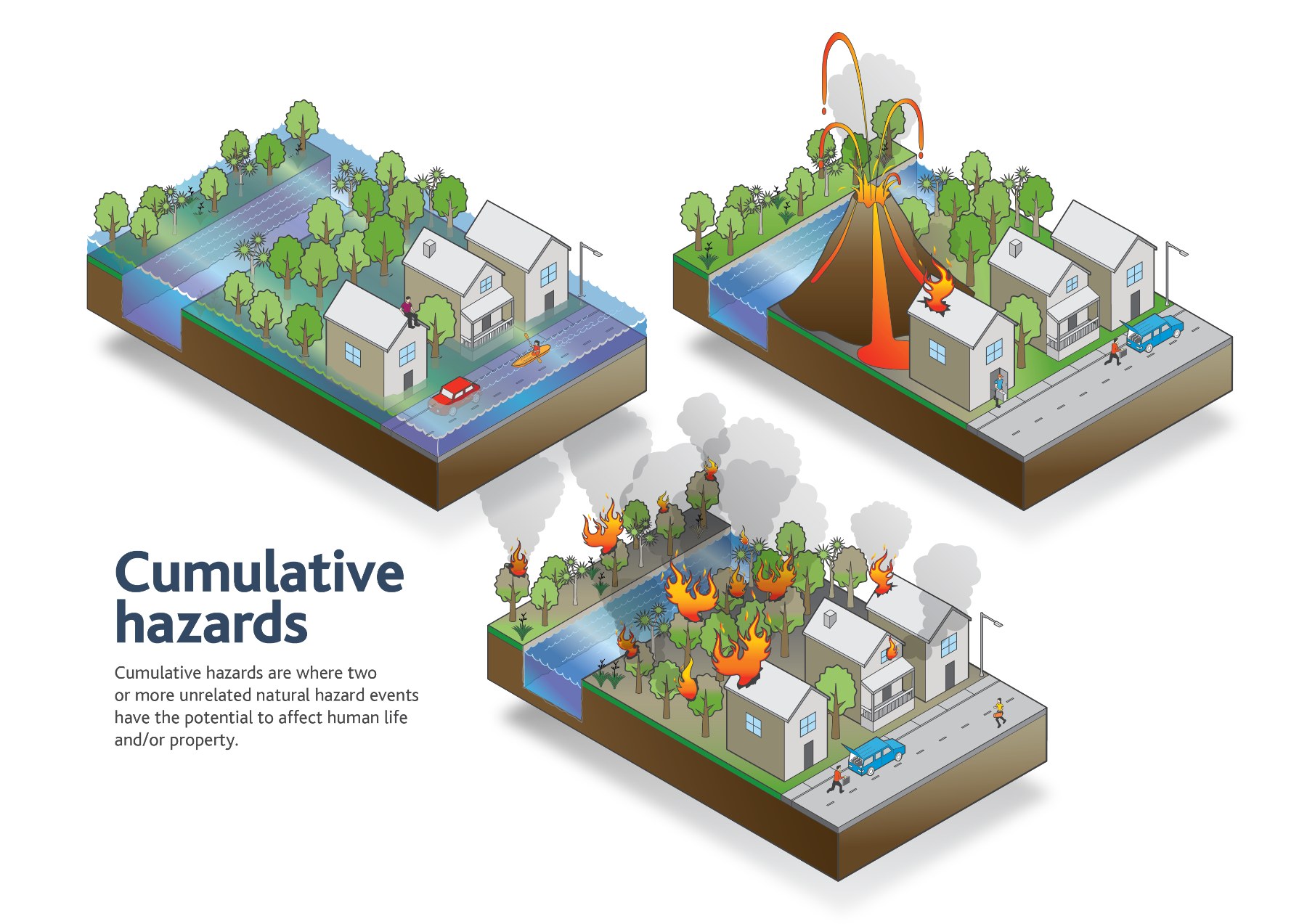
Cumulative and cascading hazard effects happen when hazards combine or trigger each other rather than occurring on their own. For example, one place can be at risk from earthquakes, floods, and landslides at the same time, so it is important to think about all the hazards together, not just one in isolation.
Example of cumulative hazards. Image sourced from Natural Hazard Risk Communications Toolbox (Auckland Council, GNS).
Sometimes one hazard sets off a chain of others. For example, an earthquake can cause a landslide, which blocks a river and forms a landslide dam (a temporary lake). If that dam suddenly fails it can send a flash flood downstream and the extra sediment can raise the riverbed over time increasing future flood hazard.
Example of cascading hazards. Image sourced from Natural Hazard Risk Communications Toolbox (Auckland Council, GNS).